

Designed around the business, not a template.
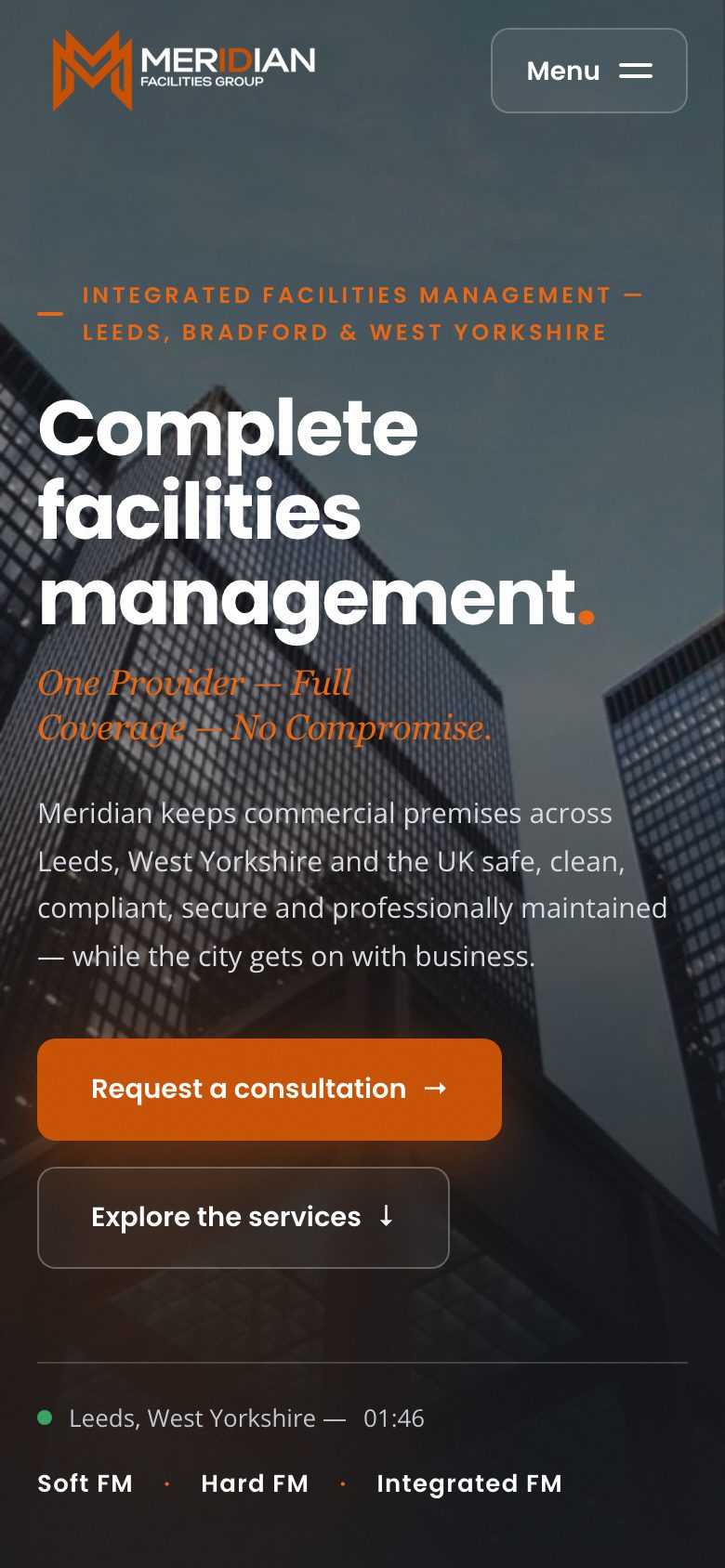
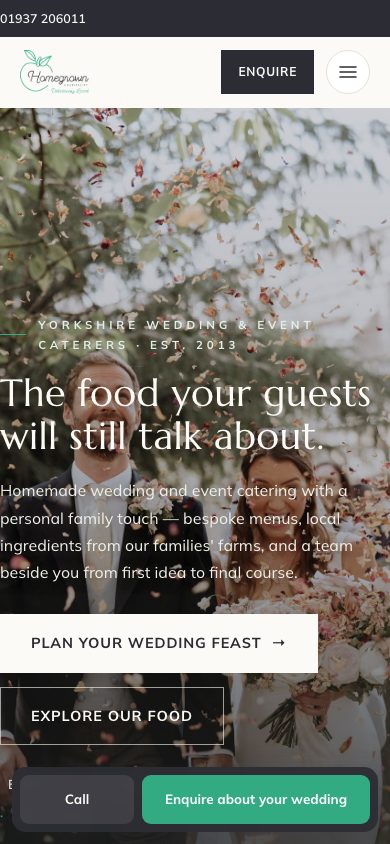
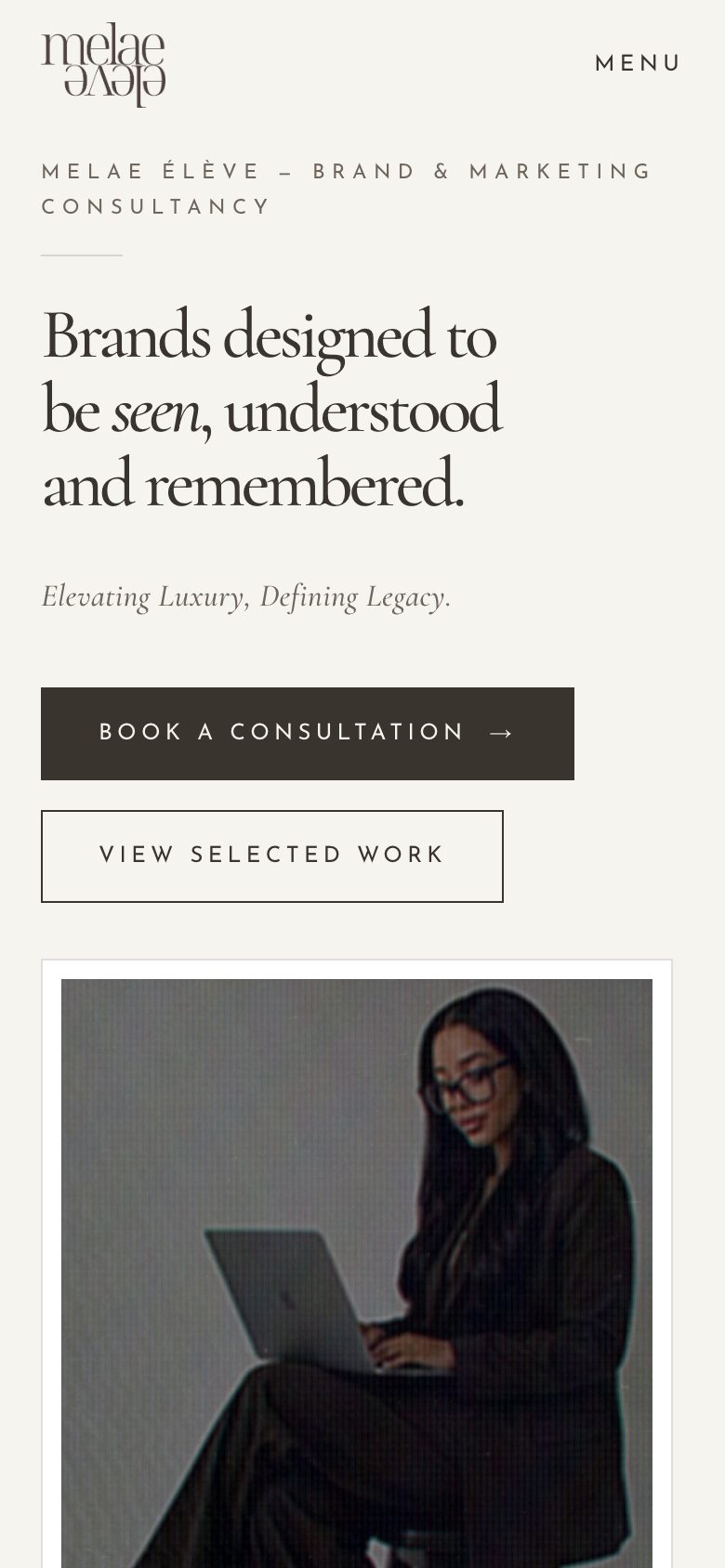
A facilities company should not look like a wedding caterer. A consultancy should not look like an online shop. The way Apyx works starts from that, and everything else follows.
The business
What it sells, how it wins work and what it is genuinely good at. The site is built to carry that, not to decorate it.
The audience
A procurement team, a couple planning a wedding and a homeowner needing a quote decide differently. The page order, the language and the first screen follow the person deciding.
The industry and the objective
Trades need quotes, shops need checkouts, consultancies need trust. Each site has one commercial goal, and the design is judged by whether it makes that goal easier.
No two look alike, because no two businesses are.
What working together looks like.
Five stages. You see real work at every one of them, and nothing moves forward until you are happy with the stage before.
01Understand
A conversation about the business, its customers and what the website needs to achieve. A look at the current site if there is one, what works and what is getting in the way. It ends with a short brief both sides agree on.
02Direction
The visual and structural direction, shown as a real concept rather than a mood board. For redesigns, that usually means the homepage designed in full so you can see the difference before anything is built. Where it helps, two directions are built so you can compare.
03Build
The approved direction becomes a working website. Real pages with real content, checked on real devices as they take shape. Sites are hand-built as fast, static code where that is the right answer, or built on a platform such as Shopify or Squarespace where the business needs to run a shop or edit content itself.
04Refine
Responsiveness, interactions, forms, speed and content are tested and tightened. Animation is checked with reduced motion switched on, scripts blocked and slow connections, so the site works for everyone, not only in a demo.
05Launch
Domain, hosting, redirects from old pages, search set-up and a final check of every form and link. Then it goes live. From there it can be handed over, or looked after on a management plan.
Creative, but never at the expense of the person using it.
Usability before decoration
A business owner who is not a designer should still understand what you do, see the work and know how to get in touch. Nothing on the site is a puzzle.
Fast, and honest about it
Optimised images, no heavy frameworks and animation that fails safe. A site that looks advanced and still loads quickly on a phone in a car park.
Nothing invented
No made-up reviews, awards, figures or clients. If a fact has not been confirmed, it goes in as a visible placeholder until it has. The site should be as trustworthy as the business.